


MLB® The Show™ Mobile Baseball
PlayStation Mobile Inc.
I approached MLB® The Show™ Mobile Baseball as a sports game for players who want a licensed-feeling baseball experience they can pick up on a phone, rather than as a simple arcade diversion. Its central promise is easy to understand: build a collection, take responsibility for plays, and try to turn individual decisions into wins. That combination gives it more depth than a quick batting game, but it also means the experience asks for more attention than a casual tap-to-score title.
Developed by PlayStation Mobile Inc., this free sports game is aimed at Everyone and requires Android 12 or later. It has passed the early discovery stage with over 100 thousand installs, while its average sits at 3.7 from around 900 ratings and more than 400 written reviews. Those figures suggest a game with a real audience but also a divided reception, which feels important here: the appeal is clear, yet the way a player feels about progression and purchases may strongly affect the overall experience.
What the baseball experience feels like on a phone
The strongest part of the concept is the sense of control. Instead of watching a simulated season unfold, I am encouraged to participate in the moments that decide an inning. That makes every at-bat feel more personal. A mistake is not merely a poor result generated by an invisible system; it feels connected to my timing, choice, or reading of the situation. For baseball fans, that extra responsibility is the reason to choose this over a lightweight score-chasing game.
The collection element adds a second layer. Building a roster of recognizable players and legends gives the game a long-term purpose beyond finishing one match. I can think about the kind of team I want, the positions that need attention, and whether a new addition actually improves the way I play. That is a more satisfying loop than simply unlocking cosmetic changes, because the collection is tied to the sport itself.
At the same time, the collection focus changes the pace. Someone looking for a pure, immediate baseball match may find the surrounding progression more prominent than expected. The game is not only about throwing, hitting, and fielding; it is also about maintaining interest in the roster you are building. I would recommend it most to people who enjoy both sides of that equation, not just the action between the lines.
Related News






The first sessions reward patience
My advice for a new player is to resist judging the game after a single short session. Sports controls often feel unfamiliar on a touchscreen, and baseball is especially sensitive to timing. A player who reacts too quickly may blame the game when the real issue is that the control rhythm has not become natural yet. I would spend the opening sessions learning how the game communicates contact, pitching decisions, and defensive responsibility before worrying about building the perfect squad.
A useful habit is to treat early matches as practice for decision-making rather than as tests of the final roster. Watch what happens when I swing early or late, see how much control I have over a pitch, and notice which situations repeatedly cause trouble. This approach makes the learning curve less frustrating and helps separate a genuine control weakness from a roster weakness.
That distinction matters because collecting a stronger player can be tempting whenever a result goes badly. Before spending anything, I would ask whether the problem is actually a missing attribute or simply a decision I can improve. In a game built around both skill and team building, that question protects the player from turning every loss into a reason to chase another upgrade.
Gallery
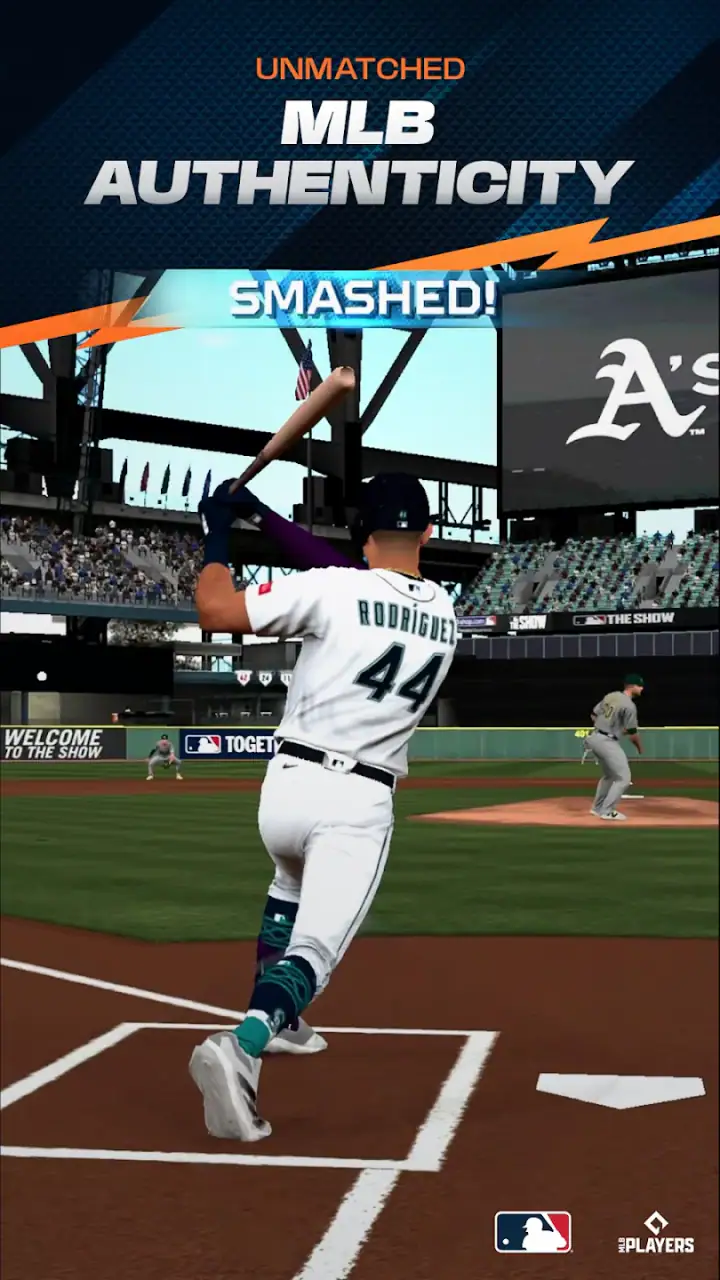
How progress can create pressure
The free entry point is helpful because I can try the core experience without committing money first. However, the presence of in-app purchases priced from $0.99 to $99.99 per item means the game deserves a more deliberate approach to spending. The range is wide enough that a small impulse purchase and a major purchase are very different decisions, even though both appear inside the same game.
I would set a personal rule before opening any purchase screen: play long enough to decide whether the baseball itself is enjoyable, and only then consider whether optional spending adds meaningful value. This is especially useful for younger players, since the Everyone age rating makes the game broadly accessible while the purchase range still calls for adult supervision and device-level spending controls.
A realistic everyday scenario would be a short evening session after work or school. I might play a few innings, adjust my lineup, and decide that one difficult loss means I need a better player. That is precisely the moment when I would stop and return later. If the desire to buy disappears after a break, the purchase was probably emotional rather than useful. If I still want it after enjoying several sessions without paying, I at least have a clearer idea of what I am choosing.
The key trade-off is that free access lowers the barrier to trying the game, while optional purchases can make progress feel more urgent for players who want a powerful collection quickly. I cannot treat every player’s experience as identical because spending habits differ. What I can say is that the game is best approached as a free-to-start title where patience is part of the value proposition.
Fairness depends on what you want from competition
Fairness is the question I would consider most carefully before recommending this to a competitive player. The game includes purchasable items, but the available purchase information does not establish how those items affect competitive strength, how quickly a non-paying player can progress, or whether paid content is limited to convenience or collection acceleration. I will not present assumptions as facts. Those details are important enough that a serious competitive player should inspect the in-game explanations before investing time or money.
For a relaxed fan, that uncertainty may not be a deal-breaker. If the main goal is to enjoy baseball moments, collect players, and improve gradually, I can accept a slower path as long as I am having fun. For someone who wants a tightly balanced contest in which every participant begins from the same practical position, the lack of clear purchase context is a reason to be cautious.
There is also a difference between fairness and satisfaction. Even if a paid item does not directly decide a match, a player may still feel pressured if the collection loop constantly highlights what could be obtained next. Conversely, a player who enjoys long-term building may see the same system as an optional extension rather than a demand. My recommendation changes with the player’s temperament: competitive purists should investigate carefully, while collectors who can ignore offers may find the structure easier to enjoy.
One practical way to protect the competitive experience is to create a personal spending boundary and judge progress against enjoyment, not against another player’s roster. I would also avoid making a purchase immediately after a losing streak. When the game is fun even with an imperfect team, the balance feels healthier. When every defeat turns into pressure to buy, it is time to step away or choose a different kind of baseball game.
Where it compares well with other baseball games
Compared with very simple mobile baseball games, this title has a more substantial identity because it combines active play with a player collection and a focus on legends. That makes it a better fit for someone who wants a continuing baseball hobby on a phone rather than a five-minute diversion. The appeal is not just the individual swing; it is the feeling of managing a developing baseball project.
Compared with a traditional console baseball game, a mobile version naturally has a different role in my routine. I am more likely to use it for accessible sessions than for a long, deeply simulated franchise evening. The phone format is convenient, but players seeking the broadest possible control scheme, the most detailed presentation, or a fully uncompromised simulation may still prefer a dedicated console or another premium alternative.
Compared with a completely offline or purchase-free sports game, the free-to-start structure gives this one a larger potential progression loop but also introduces more questions about spending. That is the central choice. I would choose this game when collecting and ongoing goals matter to me; I would choose a simpler alternative when I want a clean match without thinking about roster development or optional purchases.
Small decisions that improve the experience
First, I would separate roster evaluation from control practice. If a player is struggling to make contact, changing the lineup repeatedly can hide the real issue. A short period of consistent play with the same core group makes it easier to learn whether timing and decision-making are improving.
Second, I would treat legends as a reason to experiment, not as an automatic answer to every weakness. A famous name can be exciting, but the best collection choice depends on how I actually play. If I prefer patient at-bats, aggressive running, or a particular defensive approach, I should value the players who support that style rather than simply chasing the most impressive-looking addition.
Third, I would review my progress after several sessions instead of after every match. Baseball contains enough variation that one poor result can distort my judgment. Looking at a broader stretch of play helps me decide whether I am improving, enjoying the collection, and accepting the pace of progress without turning each setback into a purchase decision.
Finally, I would keep the version requirement in mind before recommending it to someone with an older device. The current version is 1.18.1, and Android 12 is the minimum operating system. That makes checking compatibility a sensible first step, especially if the game is intended for a family member’s phone rather than my own.
Who should play, and who should skip it
I think it is a strong candidate for baseball fans who enjoy active control, roster building, and the idea of collecting established stars and legends. It also suits players who can play patiently and decide in advance how they will handle optional purchases. The free price makes trying it straightforward, and the Everyone rating keeps the audience broad.
I would be less enthusiastic for someone who wants an entirely frictionless arcade game. The collection layer may feel like work if all that person wants is a quick home-run challenge. I would also hesitate to recommend it to a player who dislikes any uncertainty around monetization or who expects competitive play to be completely independent of spending. In that case, a simpler purchase-free alternative may provide more peace of mind.
Parents should consider the purchase range before handing over a device. The game’s age classification is accessible, but that does not remove the need to discuss spending rules. I would make sure the player understands that free access does not mean every progression shortcut is free, and I would use the device’s purchase protections where appropriate.
What I can and cannot judge about spending
The confirmed purchase range tells me that optional items are available at several price levels, from small amounts to a much larger single-item price. It does not, by itself, reveal the exact contents of each offer, the frequency of offers, the effect on competitive balance, or the speed of free progression. Those are not details I would fill in with guesses.
That uncertainty does not make the game impossible to recommend, but it changes the advice. I would play first, read each purchase description carefully, and avoid assuming that a higher price guarantees a better personal experience. A purchase should solve a clearly understood problem, such as supporting a collection goal I already care about, rather than reacting to frustration.
I also would not use the average rating as a substitute for my own priorities. A 3.7 average from around 900 ratings reflects mixed reactions, but it cannot tell me whether the dissatisfied players disliked controls, progression, performance, or spending. The useful takeaway is simply that this is not a universally loved experience. I should test the feel of the baseball and decide whether the surrounding systems fit my expectations.
My trust verdict after weighing the trade-offs
MLB® The Show™ Mobile Baseball earns my recommendation as a try-first sports game, especially for fans who want a phone-based baseball routine with collecting and meaningful on-field decisions. Its free entry point, broad age rating, and recognizable baseball focus make it easy to explore. The game becomes much more appealing when I enjoy gradual team building as much as individual matches.
My recommendation is conditional rather than automatic. I would not tell a competitive player to spend heavily before understanding how purchases interact with progress and competition. I would not suggest it to someone who wants a completely uncomplicated arcade experience. The most reliable way to enjoy it is to establish a spending boundary, learn the controls before blaming the roster, and judge the game by whether the baseball remains fun without constant upgrading.
In the end, I see a worthwhile mobile option for patient baseball fans, not a universal replacement for every other sports game. If I want a collection-driven experience and can keep optional purchases in perspective, it has enough personality to earn regular sessions. If I value absolute clarity about competitive fairness or prefer a one-time, distraction-free game, I would look elsewhere. That distinction is what makes the title worth trying carefully rather than recommending without reservations.
FAQs for MLB® The Show™ Mobile Baseball
What is MLB® The Show™ Mobile Baseball?
MLB® The Show™ Mobile Baseball is a mobile baseball experience based on the MLB The Show franchise. It is designed for fans who want to build a roster, collect professional baseball players, and compete through various game modes on a phone or tablet. The exact features, availability, and supported platforms may vary by region and by the version offered through the official app store.
Is MLB® The Show™ Mobile Baseball free to download and play?
The game may be available as a free download, but users should expect optional in-app purchases. These purchases can provide virtual currency, player items, packs, or other progression-related content. You can usually play without paying, although advancing faster or assembling a stronger team may be easier with purchases. Check the store listing carefully for current pricing, age guidance, and purchase restrictions before downloading.
Does the game require an internet connection?
An internet connection is generally important for MLB® The Show™ Mobile Baseball because roster information, events, competitive modes, account data, and purchases may depend on online services. Some menus or limited activities could potentially load without a constant connection, but the full experience should not be considered an offline baseball game. A stable Wi-Fi or mobile-data connection is recommended for smoother matches and updates.
Can I play against other people or use my favorite MLB players?
The game is intended to let players create and improve a baseball roster using professional players and participate in competitive or event-based activities, depending on the current version. Online features may include contests against other users or systems that compare your team with opponents. Licensing, available athletes, modes, and roster content can change, so review the latest in-game information and store description for details.
What devices are compatible with MLB® The Show™ Mobile Baseball?
Compatibility depends on the operating system, device model, available storage, and the publisher’s current technical requirements. Before installing, open the official Google Play Store or Apple App Store listing and confirm that your phone or tablet is supported. Keeping the operating system updated and having extra free storage is advisable, since baseball games can receive large content updates and may perform poorly on older hardware.
Pros
- Authentic MLB teams
- players
- and uniforms enhance the overall realism.
- Short gameplay sessions work well for quick matches on mobile.
- Frequent events and challenges provide useful goals beyond regular games.
- Card collection mechanics offer plenty of squad-building possibilities.
- Controller support can make batting and pitching feel more precise.
Cons
- Progress can feel slow without spending premium currency or opening packs.
- Large updates may consume considerable storage and mobile data.
- Online performance depends heavily on connection quality and server stability.
- The many currencies and menus can initially feel confusing to new players.
- Some advanced features may require newer devices for smooth performance.


